
Shampoo Ingredients Quietly Killing Your Hair Color
You switched to a sulfate-free shampoo. Your colorist told you that was the right move. Your color still fades in two weeks. So either the shampoo isn't doing its job, or "sulfate-free" doesn't actually tell the full story.
It doesn't. The ingredient category getting all the attention is one piece of a more complicated picture. Shampoo pH is often a bigger factor than the surfactant system. Chelating agents in "gentle" formulas can strip color more aggressively than sulfates. Drying alcohols show up in sprays and dry shampoos you use daily and never think to check. And in Los Angeles, where you're washing hard tap water through your hair with every shower, the baseline conditions are already working against your color before you choose a product.
Here is the actual list, organized by how each ingredient causes damage, with the context you need to apply it to your label-reading.
First: What Happens When the Wrong Product Hits Colored Hair
Hair color lives inside and just outside the cuticle, the overlapping scales that form the protective outer layer of each strand. Permanent color bonds pigment molecules inside the cortex (the middle layer). Semi-permanent and demi-permanent color deposits molecules between the cuticle scales and just inside the cuticle. Toner and gloss deposit at or near the surface. The closer to the surface the pigment lives, the more vulnerable it is to what hits the outside of the strand during every wash.
Color fades through a simple mechanism: when the cuticle opens, pigment escapes. Anything that lifts or swells the cuticle during washing accelerates that escape. Alkaline products (high pH) cause the cuticle to lift because the hair's natural pH is mildly acidic (around 4.5 to 5.5), and alkaline contact pushes it above its resting state, causing the scales to swell outward. This is true regardless of which specific surfactants or other ingredients are present. A 2014 peer-reviewed study published in the International Journal of Trichology (PubMed ID 25210332) analyzed 123 commercial shampoo brands and found that 61.78% had pH levels above the ideal color-safe range of 4.0 to 5.5. Of anti-dandruff shampoos tested, only 19.23% fell within that range. Professional salon shampoos performed considerably better, with 75% within the target range.
That study's authors also confirmed via scanning electron microscope analysis that alkaline pH increases the negative electrical charge of the hair fiber surface, generating friction, cuticle damage, and breakage. They characterized this as "a reality and not a myth" and recommended that pH be disclosed on product labels. It is not currently required under US FDA cosmetic labeling rules. You have no way to know a product's pH from the label unless the brand discloses it voluntarily.
This is the foundation for reading everything else that follows. pH matters more than any individual ingredient, and it's the least visible data point in a consumer's decision. For a comprehensive look at how hair cosmetic formulations interact with the cuticle and cortex, the Hair Cosmetics overview published in the International Journal of Trichology (2015) provides a useful structural reference.
Sulfates: The Nuance Behind the Category
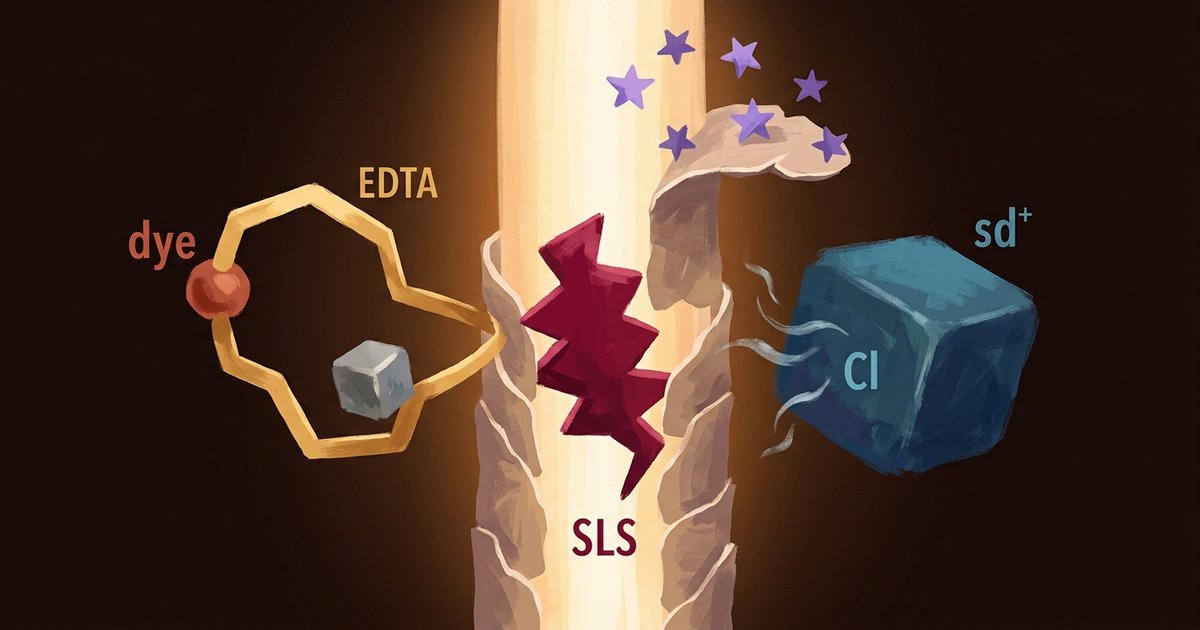
Sulfates are anionic surfactants (detergents that carry a negative electrical charge and attract both oil and water, allowing them to lift dirt from the hair). The two most common in shampoo are Sodium Lauryl Sulfate (SLS) and Sodium Laureth Sulfate (SLES). They're not the same product, and the difference matters.
SLS is the more aggressive of the two. Its smaller molecular size allows it to penetrate deeply into the hair fiber. It operates at an alkaline pH of roughly 7.5 to 8.5, causing significant cuticle swelling with each use and allowing color molecules to escape readily.
SLES is a slightly modified version of SLS that produces larger molecules, making it less penetrating and generally milder on the hair. Both compounds contribute to cuticle lift through their alkaline nature, which is why reducing or eliminating both is a reasonable starting point for color protection.
The "sulfate-free" problem: this label has no legal definition in the United States. A product marketed as sulfate-free may still contain other anionic surfactants with similar cuticle-opening effects. Sodium C14-16 olefin sulfonate, for example, appears in many sulfate-free formulas and functions comparably to SLES. Sodium cocoyl isethionate and disodium laureth sulfosuccinate are milder alternatives with better color-safety profiles, but require checking the ingredient list rather than trusting the front-of-bottle claim. The phrase "sulfate-free" tells you what the formula doesn't contain, not what it actually does.
pH: The Ingredient Nobody Looks At
Given that the 2014 study found nearly 62% of commercial shampoos outside the color-safe pH range, and that shampoo pH is not required to appear on labels, this is the most underused piece of information in color care decisions.
Products with pH above 7 force the cuticle to open and swell. Every wash with a high-pH shampoo is a small forced-opening of the cuticle, releasing pigment molecules with the rinse water. This is true even if the formula is sulfate-free, paraben-free, and labeled "color-safe."
Products with pH between 4.0 and 5.5 work at or near the hair's natural pH, keeping the cuticle in its resting, more closed position during washing. This is where professional salon shampoos tend to land, which is one concrete reason why salon-brand products perform better for color retention than drugstore alternatives, even when the ingredient lists look similar on the surfactant side.
How to check: some brands now publish pH on their website or packaging. A pH test strip (the kind used in home aquariums or pool testing) can give you a rough reading on any liquid product. Alternatively, looking for brands that specifically advertise their pH range (a brand confident enough to publish this number is usually doing so because the number is favorable) is a reasonable filtering approach.
Chelating Agents: The Color-Stripping Ingredient in Gentle Formulas
This is the category that surprises most people, because chelating agents appear in products positioned as gentle, mineral-removing, or beneficial for hard water hair.
Chelating agents, including Disodium EDTA, Tetrasodium EDTA, and related compounds, are designed to bind to metal ions. In hard water contexts, they bind to calcium, magnesium, iron, and copper deposits on the hair, which is why they appear in chelating shampoos used periodically to clear mineral buildup. This is a legitimate and useful function for color-treated hair in LA, where hard water mineral accumulation is a real problem - we cover the full scope of that issue in our article on how LA's hard water affects hair color.
The issue is concentration and frequency. At high concentrations or with regular use, chelating agents bind to dye molecules along with the minerals. Red and copper-based tones are most vulnerable because their molecular structure is more easily disrupted by chelation. Using a high-EDTA chelating shampoo every wash, the way some clients do when they assume any "hard water" shampoo should replace their regular shampoo, strips color progressively with each application.
Citric acid (often marketed as a natural alternative to EDTA) performs a similar chelating function and carries the same risk at high concentrations. It appears in many "color-safe" formulas because of its mildly acidic pH contribution (helpful) while its chelating activity is simultaneously removing trace dye molecules (harmful in excess).
The practical rule: chelating shampoos and high-EDTA formulas are valuable periodic treatments, not daily-use products. Once every two to four weeks in LA's hard water environment is appropriate. Every wash is counterproductive for color retention.
Drying Alcohols: The Culprit Hiding in Your Styling Products
When people look for alcohols in haircare, they check their shampoo. But drying alcohols most commonly appear in the products used after washing: dry shampoos, texturizing sprays, hairsprays, and some leave-in treatments. These are often used daily, and they're rarely scrutinized the way shampoo is.
The damaging alcohols for color-treated hair are isopropyl alcohol, denatured alcohol (also labeled SD alcohol or alcohol denat.), ethanol, and propanol. These are low-molecular-weight alcohols that evaporate quickly, which is why they appear in sprays (they help product dry fast). They also dehydrate the hair shaft, increasing porosity with each application. More porosity means faster color loss. Used daily across multiple products, their cumulative effect on color retention is significant.
The alcohols that are not damaging are fatty alcohols: cetearyl alcohol, cetyl alcohol, and stearyl alcohol. These appear in conditioners and cream-based products and function as conditioning agents, adding softness and moisture. Their name contains "alcohol" but they share no functional similarity with the drying alcohols above. The key is the length of the molecule, not the alcohol classification.
Check your dry shampoo, your texturizing spray, and any styling product you use before heat tools. If isopropyl alcohol, denatured alcohol, or SD alcohol appears in positions one through five on the ingredient list, it's present in a high enough concentration to be a meaningful factor in your color fade.
Sodium Chloride: The Surprise Thickener
Sodium chloride, also known as table salt, is commonly used in drugstore shampoos as a cheap thickener that gives the product a "rich" consistency without adding cost. The problem for color-treated hair is that it removes moisture from the strand with each use and interferes with color retention. Celebrity colorists Justin Anderson (co-founder of dpHue) and Gretchen Trukenbrod (Oscar Blandi Salon) have both noted sodium chloride as an ingredient to avoid in color-treated hair shampoo formulas.
It's particularly prevalent in high-lather drugstore formulas where the thickening effect is a perceived signal of quality. Looking for it in ingredient lists and prioritizing formulas that use alternative thickeners (guar gum, xanthan gum, or hydroxyethylcellulose) is a straightforward improvement most color clients can make without switching to expensive salon-brand products.
Clarifying and Purifying Formulas: When Necessary, How to Protect
Clarifying shampoos are designed to remove product buildup and excess oil using higher surfactant concentrations than regular shampoos. They're appropriate for use occasionally (once a month is a common recommendation) to prevent buildup. Used more frequently on color-treated hair, they lift cuticle scales and remove color along with the debris they're targeting.
Charcoal shampoos, salicylic acid shampoos, and other "purifying" formulas operate on a similar principle: they're more thorough cleansers by design, which means they're more thorough color strippers by the same mechanism. Anti-dandruff shampoos, notably, tested at only 19.23% within the ideal pH range in the 2014 PubMed study, making them particularly color-unfriendly as a regular wash product for colored hair.
If you need a clarifying treatment (and most color clients benefit from occasional clarification, particularly in LA's hard water environment), plan it strategically: use the clarifying shampoo shortly before a salon appointment, not immediately after one. That timing clears buildup that would otherwise interfere with new color depositing evenly, rather than stripping fresh color that just went on.
The LA Hard Water Layer
Every ingredient category above is compounded by the mineral content in LA's tap water. Hard water minerals, particularly calcium and magnesium at LA's documented 200 to 250 PPM average, deposit on the hair shaft with every wash, lifting the cuticle further. That elevated cuticle is more vulnerable to every cuticle-opening ingredient above: alkaline shampoos lift it more; sulfates penetrate more aggressively; chelating agents strip more dye along with minerals.
This is not a reason to use lower-quality products and assume the water is the only problem. It is a reason to understand that the damage-multiplication effect of LA's water means the acceptable-in-other-cities product may genuinely be unacceptable here for color retention.
Periodic chelating shampoo use (removing the mineral buildup) and UV protection (slowing photochemical color degradation between washes) are the two most impactful additions specific to the LA context, on top of the general ingredient choices above. The Hair Color LA comparison of top LA studios includes service notes on which colorists build LA's hard water into their toning and maintenance recommendations.
What to Look For Instead
The ingredient list isn't only a list of things to avoid. A few categories actively support color retention:
- Low pH formulation (4.5 to 5.5), which keeps the cuticle in its resting, closed position during washing
- Hydrolyzed proteins, particularly hydrolyzed rice protein, wheat protein, or silk protein, which fill gaps in the cuticle structure and reduce porosity
- UV filters (benzophenone-4, ethylhexyl methoxycinnamate, or newer UV-absorbing polymers) in leave-in products that provide photochemical protection against sun-driven color degradation, relevant all year in LA
- Film-forming polymers (polyquaternium compounds, panthenol) that create a light surface coating over the cuticle without buildup, helping seal in color molecules between washes
- Fatty alcohols (cetearyl, cetyl, stearyl alcohol) that condition and add moisture without lifting the cuticle
How to Read Any Label in Under a Minute
Ingredient lists are ordered by concentration from highest to lowest. The first five to seven ingredients make up the bulk of the product. Here's a fast framework:
- Scan positions one through five for SLS, SLES, or sodium chloride. Their presence in this range means high concentration.
- Look for "denatured alcohol," "SD alcohol," "isopropyl alcohol," or "ethanol" in any position. In a spray product, presence anywhere in the top half of the list is a concern.
- Check for Disodium EDTA or Tetrasodium EDTA. In a daily shampoo, these require a judgment call: fine in low concentrations, problematic if they appear in positions four through eight.
- Note whether the brand discloses pH anywhere on the label or website. If it's absent from both, that's information too.
- Check for hydrolyzed proteins and UV filters as positive signals. Their presence in a formula designed for color-treated hair indicates the brand is working with color retention as an actual formulation goal rather than a marketing claim.
For a complete picture of how at-home care and salon visits work together to maintain color in LA's environment, see our guide on protecting color-treated hair through LA summers.