
Is Olaplex Actually Worth the Salon Upcharge?
Your colorist is about to put bleach on your hair, and they ask if you want to add Olaplex for forty-five dollars. You have about thirty seconds to decide. You've heard the name, vaguely recall something about lawsuits, and aren't sure whether it's genuinely useful or a premium upsell you'll regret. That moment is exactly what this article is for.
Bond builders are not conditioning treatments, and they're not marketing fluff. But they're also not universally necessary, and the answer to whether they're worth your money depends on what service you're getting and what condition your hair is actually in. Here's how to think through it.
What a Bond Builder Actually Does (and What It Doesn't)
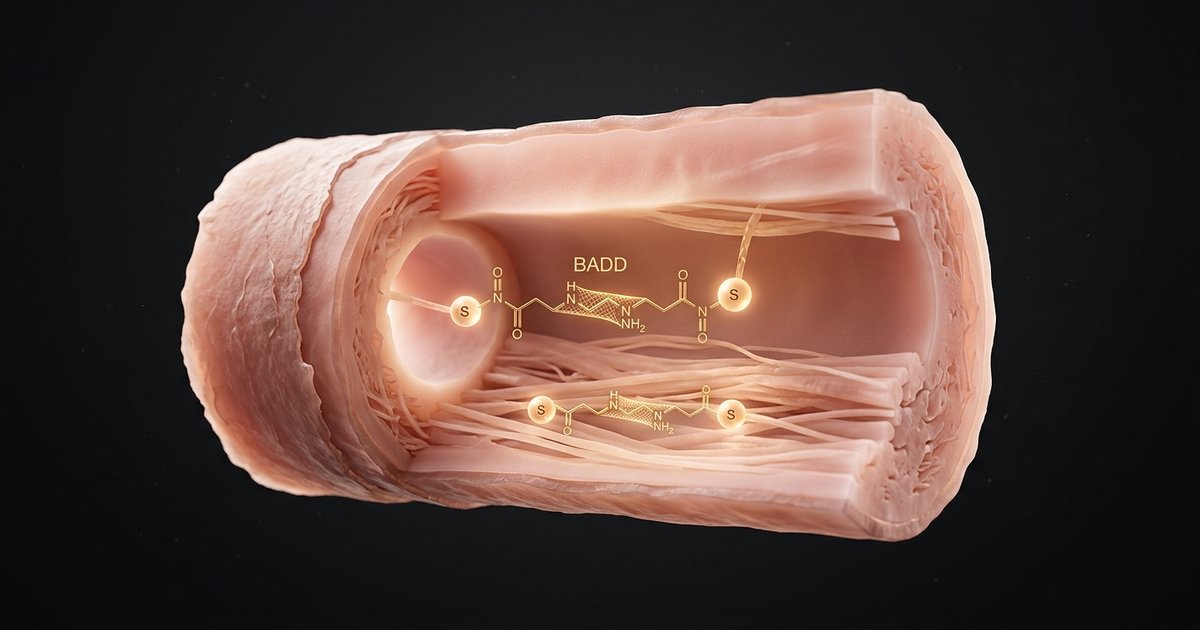
To understand bond builders, you need a brief picture of hair structure. Each strand of hair is primarily made of keratin, a structural protein. Within the cortex of the hair (the middle layer, beneath the cuticle), keratin chains are held together by several types of chemical bonds. The most structurally significant for this conversation are disulfide bonds: strong links formed between sulfur atoms in adjacent keratin chains. These bonds give hair its tensile strength and shape.
Bleach breaks disulfide bonds. That's not a side effect; it's partly how lightening works. The alkaline environment created by bleach swells and opens the cuticle, which allows the bleaching agent to penetrate the cortex and oxidize melanin pigment. That same process breaks disulfide bonds. The more you bleach, the more bonds break, and the weaker and more brittle the hair becomes. This is why heavily bleached hair snaps, stretches without returning to shape, and feels gummy when wet. These are signs of significant structural damage.
Olaplex's active ingredient is Bis-Aminopropyl Diglycol Dimaleate, a compound designed to seek out broken disulfide bonds and relink them. It works inside the cortex, not on the surface. This is the essential distinction that separates bond builders from conditioning treatments and protein treatments: a conditioner coats the surface of the cuticle to reduce friction and add softness; a protein treatment fills gaps in the cuticle with hydrolyzed proteins; a bond builder goes into the cortex and attempts to repair the structural damage itself. Bond builders offer a more fundamental, longer-lasting intervention than surface-level treatments.
Studies analyzing maleic acid derivatives, the chemical class Olaplex's active ingredient belongs to, have found measurable improvements in tensile strength (resistance to breakage) in bleach-damaged hair, with treated hair showing meaningfully less breakage compared to untreated controls. The mechanism is supported by the chemistry; it's not a marketing claim without backing. For a broader overview of hair cosmetic chemistry, including how bond-building products interact with the cortex, the 2015 overview of hair cosmetics published in the International Journal of Trichology provides useful structural context.
Olaplex vs. K18: Same Category, Different Mechanisms
Olaplex held a near-monopoly on the bond-building category for years after its 2014 launch, but K18 has emerged as a credible competitor with a different approach. Understanding the difference matters if your salon is offering you a choice or has switched from one to the other.
Olaplex targets disulfide bonds specifically. Its active molecule finds broken sulfur-to-sulfur connections and chemically relinks them. This is a targeted, well-documented mechanism focused on one bond type.
K18's active ingredient is the K18Peptide, a bioactive peptide designed to penetrate the cortex and reconnect broken polypeptide chains as well as disulfide bonds. Polypeptide chains (sometimes called peptide chains) are the longer backbone structures that the disulfide bonds connect across. The claim is that K18 addresses a broader range of structural damage than Olaplex. According to K18's science documentation, their peptide technology targets "multiple types of bonds including polypeptide chains and disulfide bonds to reverse damage from bleach, color, chemical services, and heat." Independent peer-reviewed data on K18 specifically is thinner than what exists for Olaplex, so the comparison rests partly on brand claims and professional anecdote.
One professional perspective that circulates among colorists: "Olaplex would be best for someone who has minimal chemical damage, while K18 is a stronger product and would be better for someone with extensive damage from bleaching or constant heat-styling." This isn't a scientific classification, but it reflects a working judgment that many professionals use to direct clients toward one product versus the other.
The Hair Types and Service Types That Actually Benefit
Bond builders work by repairing broken bonds. If very few bonds are broken to begin with, there's little for the product to do. That logic defines who benefits most and who benefits least.
The strongest candidates for bond builder treatment are:
- Bleached and highlighted hair, particularly hair lifted more than two or three levels
- Hair undergoing color correction (multiple lightening sessions in sequence)
- Chemically relaxed hair, which involves a different but equally bond-disrupting chemical process
- Heavily heat-damaged hair where cumulative thermal stress has broken bonds over time
The candidates who benefit minimally or not at all:
- Virgin, unprocessed hair with no chemical or significant heat history
- Healthy hair with a low-porosity cuticle and intact structure
- Fine hair that is not currently damaged, where overuse of bond builders can lead to product buildup
There's a specific caution for healthy hair: Olaplex No.3, the at-home maintenance version, should not be used more than twice weekly on already-healthy hair. The active molecule needs broken bonds to act on. In hair with minimal bond damage, overuse can paradoxically increase brittleness. The product works best where genuine damage exists. Healthy hair used as a preventive treatment target can get too much of a compound with nothing to repair.
How Olaplex Is Used in the Salon: In-Service vs. At-Home
This distinction is worth making clearly, because many clients conflate the at-home product (No.3) with the professional in-service application (No.1 and No.2).
Olaplex No.1 (Bond Multiplier) is a professional-only product mixed directly into bleach or lightener during your color service. It works preventively, protecting bonds as the lightening agent breaks them. The goal is to minimize the damage done during the chemical service itself.
Olaplex No.2 (Bond Perfector) is applied after the lightening service is complete, before the hair is shampooed. It continues the repairing process on bonds broken during the service and is the product that "seals in" the repair work initiated by No.1.
These two products work as a system and are the basis of the in-salon Olaplex add-on you're being offered. The upcharge covers both the product cost and the colorist's time for the application.
Olaplex No.3 is the retail product available for home use. It's applied to damp hair before shampooing and used for ongoing maintenance between salon visits. It is a different product with a different concentration than the professional formulas and should not be confused with the in-service treatment.
In 2025 and 2026, Olaplex introduced No.3Plus, which targets not just disulfide bonds but also salt bonds and hydrogen bonds, the other bond types disrupted by chemical services and heat. This expands the product's mechanism beyond the original single-bond-type approach and represents a substantive evolution in the formula.
What the Olaplex Lawsuit Was, and Where Things Stand Now
In February 2023, a group of individuals filed a lawsuit against Olaplex alleging that certain products had caused hair loss and scalp injuries, citing several ingredients including lilial, a synthetic fragrance compound. The lawsuit eventually included over 100 plaintiffs. It was dismissed by the court on July 11, 2023.
The ingredient at the center of the concern was lilial (also called butylphenyl methylpropional). The European Union required its removal from cosmetics by March 2022 following findings in animal studies that suggested fertility and reproductive risks. Olaplex removed lilial from its products in 2022 in response to the EU ban, before the lawsuit was filed in the US.
The reformulated Olaplex product line has been commercially available since 2022 without the ingredients central to the lawsuit, and no major new safety concerns have emerged since. Olaplex maintains a health and safety page at olaplex.com/pages/health-and-safety that lists current ingredient information. The lawsuit's dismissal and the ingredient reformulation are both material facts for any client evaluating whether to use the product.
The practical takeaway: the current Olaplex product line is reformulated, the lawsuit was dismissed, and if you have existing concerns about any specific ingredient, reviewing the current formulation on their official safety page is the right step before making a decision.
Is the Upcharge Worth It for Your Service?
Here's a working decision framework:
- What service are you getting? If you're having a full-head bleach, a color correction, or a significant highlight service, bond builder is likely to provide measurable benefit. If you're getting a deposit-only gloss or a mild semi-permanent color, the chemical stress on your hair is low and the benefit is correspondingly minimal.
- What condition is your hair in? Damaged, processed, or chemically treated hair has broken bonds available to repair. Healthy, unprocessed hair has very few. Honest self-assessment here matters more than what sounds appealing at the salon.
- What's the cost? Salon add-on pricing for Olaplex No.1/No.2 in LA ranges from around $25 at neighborhood salons to $75 or more at luxury West Hollywood or Beverly Hills salons. The cost-benefit calculation at $25 for a bleach service on damaged hair is different than at $75 for a gloss on healthy hair.
- Are you already using at-home bond maintenance? If you're using Olaplex No.3 or a similar at-home bond treatment consistently between salon visits, the in-service add-on becomes part of a maintenance system rather than a standalone decision.
If the answer to questions one and two is "heavy service, damaged hair," the add-on is almost certainly worth it. If the answer is "mild service, healthy hair," you can reasonably decline without compromising your outcome.
If you're evaluating which LA studios routinely include bond builder in their color services as standard, the Hair Color LA ranked comparison of top LA studios includes service detail in each profile.
What to Ask Your Colorist Before Saying Yes or No
These questions will help you make a more informed decision at the consultation, rather than in the thirty seconds before the service starts:
- "Given my hair's condition and what you're doing today, do you think my hair has enough bond damage for Olaplex to be genuinely useful, or is it more of a preventive measure?" An honest answer acknowledges the difference.
- "Are you using No.1 in the bleach itself, or just applying No.2 afterward?" Using No.1 preventively during the lightening process is the most effective application method.
- "Is this something you'd recommend I do every time I'm in, or is it a targeted treatment for today's service specifically?" Regular recommendation versus targeted use signals whether they're treating your condition or applying a default add-on.
- "Do you offer K18 as an alternative, and how would you decide which is better for my hair?" A colorist who understands both products and can explain the reasoning will give you confidence in the recommendation.
If your hair is already in a compromised state from previous lightening, it's also worth reading our piece on shampoo ingredients that damage color-treated hair before restocking your home care routine post-service. And if you're heading into a color correction where bond building is especially important, our guide on what to expect during a color correction appointment covers how bond builders fit into that process.