Silver Lake vs. Beverly Hills: LA's Hair Color Divide by Area
There's a question that comes up almost every time someone moves to a new part of LA and starts looking for a colorist: "Where do people like me get their hair done?" It sounds vague, but it's actually pretty specific. What they're really asking is: which salon is going to give me color that fits who I am in this neighborhood, not who I'd need to be in a different one?
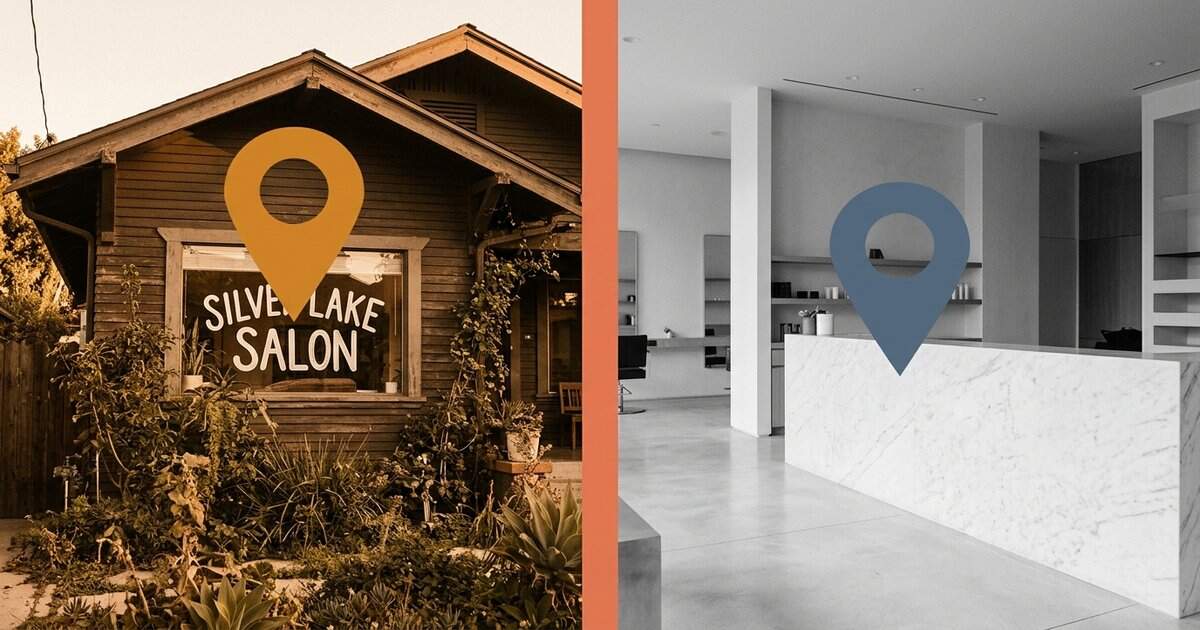
Los Angeles does not have a single hair color market. It has several, stacked by geography, separated by culture, and priced accordingly. The city you see on Instagram is Beverly Hills: glossy, maintained, high-contrast. The city a lot of people actually live in looks more like Silver Lake, where the colorist might rent a chair in a converted Craftsman bungalow and keeps a waitlist of East Side creatives who want technically skilled color that doesn't announce itself.
Both are real. Neither is better, necessarily. But they are genuinely different, and knowing which one you're in - or which one you need - matters before you book anything.
What "Neighborhood" Actually Means When You're Booking Color
The neighborhood shapes the salon, and the salon shapes what you get. That's not just about price, though price is a real factor. It's about the reference culture the colorist lives in, the client base they've built up, the training environments that shaped them, and the aesthetic they get excited to create.
A colorist working at a Beverly Hills flagship builds their eye around clients who show up with Vogue editorials and red carpet references. They're calibrated for high-contrast, camera-ready color - the kind of result that needs to look right in a photo because their clients' photos end up places. A colorist working independently in Silver Lake is calibrated for clients who might bring in a photo of a musician or an East Side neighbor, someone who wants their color to look good in actual life rather than on a red carpet backdrop.
Neither is wrong. They're just pointing in different directions.
The Eastside Profile: Silver Lake, Echo Park, Los Feliz, Eagle Rock
East LA salons have long offered "the cool factor" alongside pricing that reflects lower overhead and an independent chair-rental model. What the Eastside actually offers is a specific kind of creative independence that shapes how color gets done there.
Southpaw Salon in Silver Lake - one of the more cited studios in the neighborhood - attracts "Eastside creatives, local residents, and fashion-forward celebrity artists, musicians, comedians, and actors," according to Beauty Launchpad's trade profile. A stylist there once described the studio's approach as "punk-rock academic," which is the kind of self-description you won't find in a Beverly Hills salon brochure. It's not about being rough or unfinished - it's about valuing craft and originality over palatability.
Lauren Bailey-Chaidez, who owns Fever Few Hair in Eagle Rock and Highland Park, has noted that the dominant local request in recent seasons has been "warmer blondes." That matches the Eastside color story: people who want dimension and warmth, something that looks intentional but not polished into something artificial. The color has to look right walking to a show in Los Feliz or meeting friends at a coffeehouse in Echo Park.
Adriana Tesler, who runs Tesler Salon in Silver Lake, is an Emmy-nominated celebrity hairstylist - which is a useful reminder that "Eastside indie" and "high-credential" are not mutually exclusive. You can find serious technical skill on the Eastside. What you're less likely to find is the luxury hospitality format: the champagne, the waiting room with designer furniture, the private suite. That's not really the point of what those salons are doing.
On price: Eastside salons generally run lower than their Westside counterparts, though the range is wide enough that "generally lower" is about as far as honest generalization will take you. The independent chair-rental model common in Silver Lake and Echo Park keeps overhead lower, which often means the colorist can charge less for the same skill level as someone operating inside a full-service salon with more infrastructure costs.
The Westside Profile: Beverly Hills, Brentwood, the Luxury Corridor
Beverly Hills hair color is built around a different client need: discretion, hospitality, and results that have to hold up under serious scrutiny. Rossano Ferretti Beverly Hills operates in the most exclusive shopping district in Los Angeles and is listed by Leading Salons of the World as serving "the highest clientele from all over the world." The salon includes a library, cafe area, and private suite - not as a design statement, but because clients with public profiles need to not be seen. That's a service requirement, not an aesthetic choice.
The M Salon Beverly Hills publishes its pricing publicly: single process color starts at $95, and full-service experiences at the high-end luxury tier can reach $600 or more before tip. That number reflects real costs: high-rent location, fully staffed support team, luxury product lines, and the hospitality infrastructure. What it also reflects is access to colorists who have built their books around clients who are photographed regularly and for whom "close enough" at the chair isn't acceptable.
Colorists on the Westside tend to describe their clients' reference culture as VIP-oriented: clients come in knowing exactly what they want, often with references from specific editorial shoots or specific celebrities. The color that gets done there leans toward high-contrast, precisely finished, very camera-friendly results. Balayage at a Beverly Hills salon looks different from balayage at a Silver Lake chair-rental studio, not because the technique is different but because the calibration is different.
Price as a Signal - and When It Isn't
Price is the first thing people ask about and often the least useful thing to focus on. A $450 single-process at a Beverly Hills salon and a $150 single-process at an independent Silver Lake studio are not just different prices for the same service. They are different services, shaped by different infrastructure, different client expectations, and different definitions of what a successful outcome looks like.
That said, price is not always a reliable indicator of skill. An independent colorist in Echo Park charging $120 for a full balayage might have trained at the same level as someone doing the same service for $380 in West Hollywood. The difference is overhead, business model, and what kind of experience surrounds the actual color work. If you want the color and don't need the champagne, you can often find equivalent skill at a lower price point on the Eastside.
Where price does mean something real: at the top of the Beverly Hills market, you're paying in part for access to colorists who have kept books of high-visibility clients for years. Having to deliver flawless results repeatedly, on hair that ends up in entertainment media, produces a particular kind of pressure-tested precision. Whether that matters to you depends entirely on what you're booking color for.
The In-Between: West Hollywood, Studio City, Larchmont
West Hollywood is the most interesting zone in LA hair because it refuses to sit cleanly on either side of the divide. It has historically been the center of LA's entertainment-industry and gay hair culture, and it contains both $50 walk-in color studios and $400 appointment-only services within a few blocks of each other.
Mare Salon in West Hollywood has noted clients trending toward "very natural and low-maintenance" looks. Benjamin Salon, also in West Hollywood, has reported "random pops of neon bright color" as a client preference. Both are in the same neighborhood. Both are accurate. That's West Hollywood: the aesthetic range there is genuinely wider than anywhere else in the city.
Studio City runs warmer, more suburban, and tends toward the Beverly Hills side of the market without quite reaching Beverly Hills prices. Larchmont Village has its own community of independent operators who serve the Hancock Park and Koreatown-adjacent client base with a mix of approaches. Neither neighborhood fits the Eastside/Westside binary neatly, which is probably a more accurate picture of how LA actually works.
How to Use Neighborhood Knowledge When You're Booking
Use the neighborhood as a first filter, not a final answer. If you want high-contrast, precision-finished, camera-ready color and you're comfortable with Beverly Hills pricing, start there. If you want technically skilled color that leans creative, warm, and lived-in, and you'd rather put your money into the color itself than the hospitality around it, the Eastside is worth your time.
After that, the individual colorist matters more than the zip code. The California Board of Barbering and Cosmetology issues the same license regardless of neighborhood. What separates a Beverly Hills colorist from a Silver Lake one isn't a credential - it's the training environment, the mentor network, the client base they've spent years calibrating for, and the aesthetic that environment rewards.
Look at the portfolio. Not the neighborhood, not the salon name - the actual work. A colorist in Echo Park who has done beautiful warm balayage for five years is going to outperform a Beverly Hills colorist whose entire book is platinum on that specific request. The neighborhood tells you what the salon tends to produce. The portfolio tells you whether this particular colorist can deliver what you're actually after. For a guide to reading that portfolio critically, see our piece on how to evaluate a colorist's Instagram before booking.
And for side-by-side comparison of specific studios regardless of neighborhood, the Hair Color LA ranked list of top LA studios includes geographic context alongside scoring and reviews. For additional guidance on how to match your specific hair type to the right colorist regardless of neighborhood, see our guide on finding the best LA colorist for your hair type.
Neighborhood-by-Neighborhood Snapshot
- Silver Lake / Echo Park / Los Feliz: Independent chair-rental model common; creative, warm, lived-in color aesthetic; warmer blondes and dimensional brunettes dominant; lower overhead often means lower price for comparable skill; expect a more personal, less hospitality-forward experience
- Eagle Rock / Highland Park: Similar to Silver Lake; strong indie operator community; local creative client base; warm blonde and natural-look color predominates
- Beverly Hills: Luxury flagship model; high-contrast, camera-ready, precision-finished color; highest price tier in LA; strong discretion and hospitality infrastructure; access to colorists calibrated by high-visibility clientele
- Brentwood: Similar to Beverly Hills in price and finish expectation; slightly more relaxed in atmosphere; strong demand for low-maintenance but polished color
- West Hollywood: Widest aesthetic range in the city; entertainment-industry and creative client base; both budget and luxury price points within close proximity; natural/low-maintenance and vivid/bold color both well-represented
- Studio City: Leans Westside in expectation; family-friendly and polished; slightly lower price tier than Beverly Hills; warm blonde and balayage dominant
- Larchmont / Hancock Park: Mixed independent and mid-range salon model; serves a diverse neighborhood aesthetic; not strongly aligned with either Eastside or Westside profile