Ask ten colorists around Los Angeles to explain the difference between balayage and ombre, and most will pause before answering. That pause is the tell. Most balayage vs ombre write-ups online pitch them as two competing looks on the same menu, but they are not measuring the same thing at all.
Balayage is a freehand painting technique, the how of the color application. Ombre is a placement and a finished result, the where and the what. A colorist can absolutely use balayage's freehand technique to build an ombre's dark to light gradient, which is exactly where most of the confusion, and most of the pricing surprises, come from.
That last point matters more than it sounds. A client who books "balayage" and a client who books "ombre" at the same Silver Lake salon can walk out with nearly identical hair and very different receipts, because the salon is pricing one of them by technique and the other by result. Sorting that out before you sit in the chair saves you the redo conversation at checkout.
Balayage Is a Technique, Not a Look
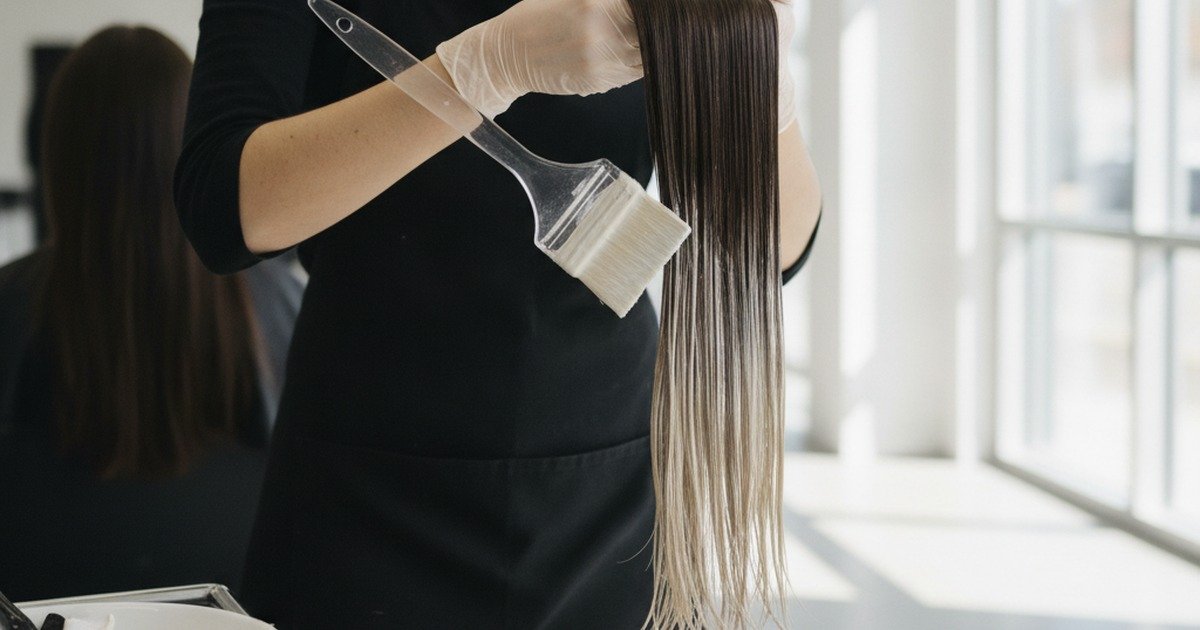
Balayage comes from the French word for sweeping, and that's a fair description of what happens in the chair. A colorist hand paints lightener directly onto the surface of small hair sections, working the color away from the root and building it heavier toward the ends. According to Matrix, the professional color brand owned by L'Oreal, this freehand approach produces a soft, diffused result with no hard demarcation line where the color starts. Most of the time it processes open air, without foil or plastic wrap, which lets the color diffuse with ambient heat instead of trapped heat.
Darker hair sometimes needs more lift than open air processing can deliver, which is where foilayage comes in. It's the same freehand painting, followed by wrapping the painted sections in foil to add heat and pull the color lighter. The Look Hair Salon in Glendale puts total balayage chair time at roughly two to four hours for most services, longer on long or thick hair, a range the pricing section below breaks down by service.
None of this is the technique versus foiled highlights argument, which is a different comparison with its own math on cost and upkeep. If that's the decision in front of you, our guide to balayage versus foiled highlights walks through it directly. This article is solving a narrower problem: what balayage actually is, and how that differs from ombre.
What Ombre Actually Means
Ombre describes a visual outcome: a two toned, dark to light vertical gradient, most commonly built by applying lightener horizontally starting somewhere below the mid shaft or the ears and blending the transition upward. Matrix's technical comparison, cited above, draws this line clearly, noting that ombre can read soft or hard lined depending entirely on how the transition is executed. The classic application method is sectioning the hair in full horizontal blocks rather than painting freehand strand by strand. When someone searches for ombre hair color, this two toned gradient, not any particular way of building it, is usually the picture in their head.
A related technique called color melting uses two or three tones blended into each other for a more gradual version of the same idea, softening what would otherwise be a visible line between the dark top and the lightened bottom. What all of these share is the same defining feature: a gradient result, regardless of which technique built it. That is the detail that trips people up, and it is worth sitting with before you book anything.
The Overlap: Ombre Built With Balayage
Here is where the distinction becomes airtight, because balayage and ombre are not opposites and they are not rivals. A colorist can build an ombre style gradient using balayage's freehand painting instead of a horizontal foil or block application. Salons commonly market this hybrid as sombre, short for soft ombre, and it shows up constantly in LA salons because it produces a gradient with balayage's diffused, low contrast edges rather than a hard line. The mechanism is simple once you see it: paint a low, saturated sweep and blend the transition upward, and the finish reads as ombre while the technique underneath stays balayage.
This overlap is documented consistently across salon and brand sources covering the two services. What that means practically is that ombre was never really a technique you could book on its own. It's a look that gets built with one of several techniques, and which technique your colorist uses changes both how it grows out and what it costs.
Clients run into this mismatch more often than salons like to admit. A reference photo pulled from social media labeled "ombre" is frequently a soft balayage result, and a photo labeled "balayage" is sometimes closer to a classic hard lined ombre. The confusion is rarely about taste. It is almost always about paying for a technique, meaning time and hand skill, versus paying for a simpler two tone application.
Why This Mix-Up Keeps Happening Now
Part of the reason balayage and ombre get treated as interchangeable comes down to how most people actually book a color appointment today: with a screenshot, not a vocabulary word. A photo saved from Instagram or Pinterest gets handed to a colorist as "this ombre" or "this balayage," and the label on that photo was usually written by whoever posted it, not by the colorist who executed the color. That caption is frequently wrong, which means the mismatch starts before anyone even sits in the chair.
A good consult corrects for this by asking which technique will actually recreate the reference photo, rather than just approving the photo itself. That one question, asked before any lightener touches your hair, is what keeps a soft balayage request from turning into a horizontal ombre quote, or the reverse.
There's also a maintenance driver specific to living in Los Angeles. Clients here deal with steady sun exposure, chlorine from pool time, and schedules that don't always leave room for a monthly salon visit. A placement that grows out gently, whichever technique built it, fits that lifestyle better than color with a hard line that needs retouching on a strict clock. That's a big part of why a soft, no hard line gradient is such a common request in LA salons, and why the balayage executed hybrid known as sombre gets offered so often to produce exactly that look.
What Grow-Out Actually Looks Like for Each
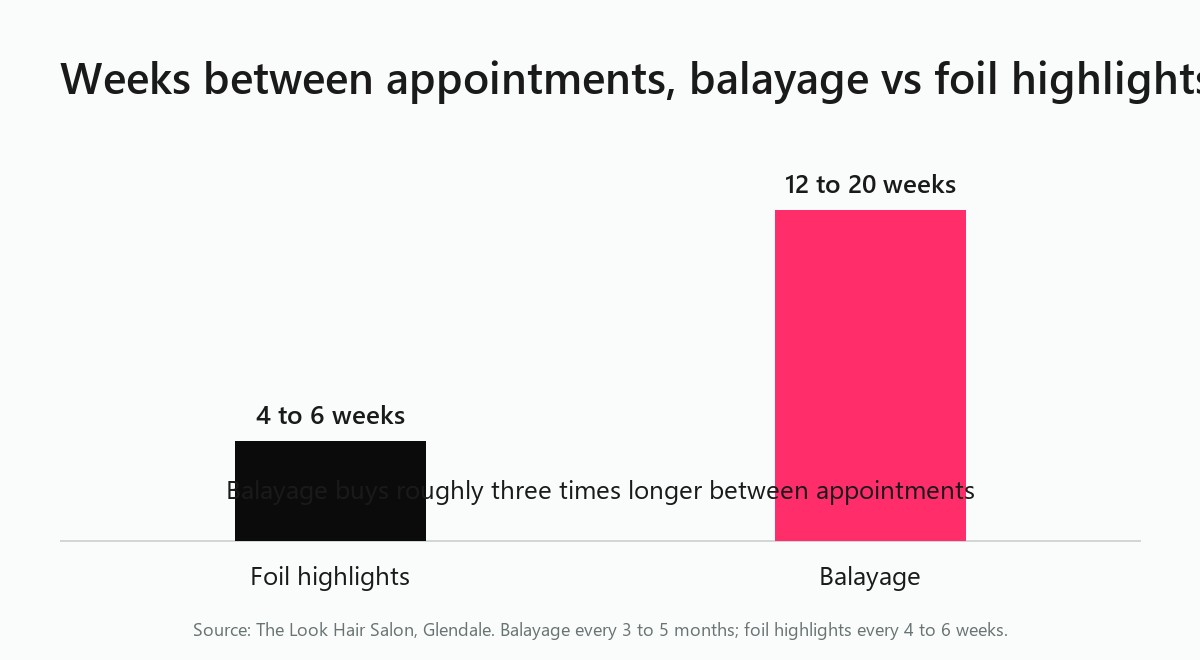
Balayage grows out gently because the lightening never started at the scalp to begin with. Roots do not create a hard line to chase the way a solid retouch color does; they soften into the surrounding gradient over time instead of visibly deteriorating. According to The Look Hair Salon in Glendale, in Greater Los Angeles, balayage clients return for a refresh every three to five months, compared to every four to six weeks for traditional foil highlights. That gap alone explains a lot of balayage's popularity with clients who don't want to live at the salon.
Ombre's grow-out story runs on a different mechanism than balayage's, since the root itself was never lightened at all. New growth sits against hair that's already meant to look dark, so there's less regrowth doing anything visually, rather than a root gradually softening into a gradient. For the color transition itself, expect a comparably long stretch before you need a refresh, sometimes longer, since there's no root line pulling you back into the chair on its own clock.
One caveat worth knowing before you book: toner and gloss refreshes, which manage brassiness rather than the underlying lightened color, tend to run on a shorter clock. General industry sources put that cadence around six to ten weeks, though that figure isn't LA specific and will vary by salon, water hardness, and how much sun your particular ends see.
Who Suits Which
Balayage tends to flatter fine hair especially well, since the graduated, lower saturation application adds dimension without the flattening effect a bold contrast can create on thinner strands. Matrix notes it also works across curly and wavy textures, because freehand painting can follow the hair's natural movement instead of fighting it. Very dark base levels, roughly levels one through four, are the exception: those bases usually need the foil assisted lift of foilayage to reach a noticeable result.
Ombre asks for a different kind of canvas, and the read here comes from general professional consensus rather than one single citation. Its bolder, higher contrast placement suits thicker or coarser hair that can carry a visible line without looking flat, and it reads best on longer to medium lengths where there's enough hair to actually show a gradient. Curly textures are the trickier read here, since the curl pattern tends to break up or hide the very transition line the look depends on.
How LA Colorists Actually Price and Book These
This is the part that actually determines what you pay, and it comes down to one mechanism: balayage, along with any ombre built using balayage technique, gets priced and booked as a technique. That means time, hair length, and density drive the quote, not the name of the final look. The Look Hair Salon in Glendale lists partial balayage at $150 to $250 for two to three hours of chair time, full balayage at $200 to $350 or more for three to four hours, and a toner or gloss add on at $40 to $75 for another thirty minutes. Long or thick hair can push sessions to four or five hours, plus a length charge.
Park and Eve Hair Studio in Los Angeles lists hand painted balayage from $175 to $450 or more, naming hair length and density as the single biggest cost factor, followed by how far the target color sits from your natural base and your prior color history.
A simple two tone, horizontal ombre works on a different pricing logic entirely, closer to a highlight service than to balayage. Because it typically skips the freehand, section by section painting that eats up balayage's chair time, salons can generally quote and book it faster and for less than a technique heavy balayage or sombre appointment. Neither of the LA salons cited above publishes a standalone dollar figure for a classic horizontal ombre, so treat that as a general pattern in how the service gets booked rather than a specific local price.
If your colorist quotes you balayage money for what you assumed was a simple ombre, that gap usually reflects the technique being used, time and hand skill, rather than a padded price.
For a sense of what drives a color quote up more broadly, including corrective work, our guide to color correction costs in LA breaks down the variables salons weigh beyond the base technique.
Maintenance Intervals: What to Actually Book Next
If you're trying to plan your calendar around whichever service you choose, the honest answer is that both age gracefully compared to solid color or foil highlights, just for different structural reasons. Balayage buys you roughly three to five months between visits, as noted above, because the root was never pushed to the scalp line in the first place. Ombre buys you a comparable stretch, sometimes a bit longer, because there's no root line at all to chase, though your gloss or toner may need refreshing on its own shorter schedule in between.
Texture, base level, and how much contrast you actually want all shape the real answer more than any general rule can. That's a good conversation to have with your colorist before you book, not after, since matching the technique to your hair's texture is what determines how the grow-out behaves in the first place. Between choosing a colorist who reads your texture correctly and walking in with the right questions instead of just a reference photo, our guide on finding the right LA colorist and what to ask before you book cover both sides of that groundwork.
None of that groundwork matters if the label on your reference photo doesn't match the technique your colorist actually plans to use. Before any lightener touches your hair, ask which technique they're planning to use to get you there.