

You're standing in your bathroom, a wet strand wrapped around your finger, watching it stretch like taffy and never spring back. Or maybe it just snapped in half in your hand with no warning at all. Fixing damaged bleached hair starts with something most bottles and most blogs skip over: part of what's happened inside that strand is permanent. No product undoes it.
That's not a reason to panic or hack off ten inches tonight, though. There's a real plan here, the same one I'd walk a client through in the chair, and it starts with telling you exactly what you're dealing with. LA's dry heat and heavy sun exposure make this decision more urgent than it would be somewhere cooler and wetter, since bleached hair already missing structural bonds has even less defense against UV and dry air pulling moisture out of it.
What Bleach Damage Looks Like Inside the Hair Shaft
A peer-reviewed review of hair care physicochemistry archived in the NIH's PubMed Central database puts the cortex at roughly 90 percent of each strand's weight. That cortex is built from keratin filaments held together by cystine disulfide bonds, the same bonds a perm rearranges and lightener breaks apart to lift color out of the shaft. Bleach works by oxidizing those bonds.
It isn't selectively dissolving pigment while leaving the rest of the structure untouched. It's breaking chemical bonds throughout the fiber to get there, and that's true whether the lift happened in one session or built up over a year of touch-ups.
Here's the part that matters most. Hair is dead, non-replicating tissue. There's no blood supply past the root and no cellular repair process standing by to patch a broken bond once it happens. That same review lays this out plainly: damage at the cortex level cannot be biologically repaired, only physically masked with conditioning agents until the damaged section is cut away.
I wish every "repair" shampoo led with that sentence instead of the marketing copy underneath it. It doesn't, partly because the Food and Drug Administration (FDA) does not pre-review or approve cosmetic claims before a product reaches shelves. A label that promises to repair damaged hair only faces scrutiny after the fact, and only if it's deceptive enough for someone to file a complaint.
So when a conditioner claims to rebuild your hair from the inside, what it's usually doing is coating the outside so light reflects off it more evenly. It's a real benefit, worth paying for. It's just not repair, and knowing the difference changes what you should expect to see in the mirror after using it.
The Warning Signs That Mean Stop Coloring Right Now
Some damage is manageable. Some means you need to put the bleach down and walk away from the bowl for a while. I've had clients cry in my chair over hair a previous stylist kept lifting past the point where it could survive another round. Here's how to catch it before that happens to you.
- Gumminess when wet. Wet hair should feel slippery when you run your fingers through it, not sticky or stretchy like melted cheese.
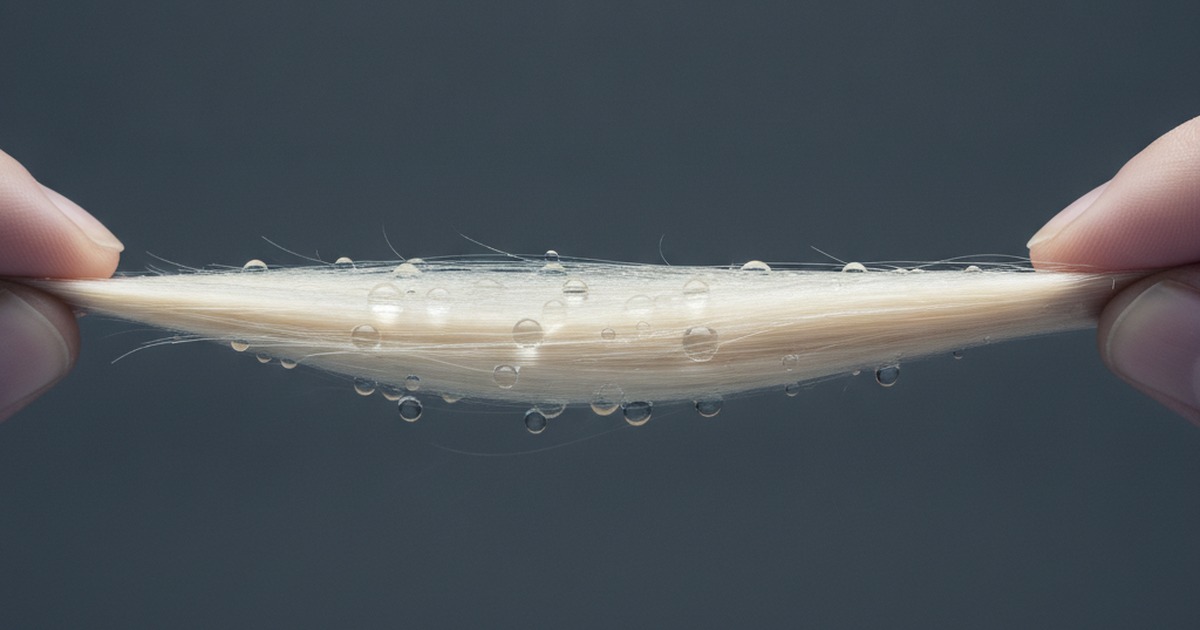
- Over-stretching without snap-back. A gentle pull on a healthy strand gives a little and returns to shape. Compromised hair keeps elongating and stays there.
- Snapping or breaking with almost no resistance. This means midshaft breakage, not the normal shedding you see at the root.
- A mushy, cotton-candy texture when wet that dries into something closer to straw.
If you're seeing any of these, more lightener needs to come off the table until the hair recovers enough structure to survive another round. For some sections, that point won't arrive before your next cut does.
Stop Doing More Damage
Once you've spotted a warning sign, the immediate job is triage, not restoration. That starts with spacing out sessions. Bleaching every few weeks to chase a root or fix a patch of brass doesn't give the cortex any window to recover flexibility, and every pass stacks new breakage on top of what's already there.
Developer strength matters more than most people realize. Twenty-volume developer lifts gently, usually a level or two. Thirty-volume lifts further, generally in the two-to-three-level range. Forty-volume is reserved for maximum lift, and it's also the hardest on the hair.
A colorist who reaches for 40-volume on hair that's already compromised, without a specific reason for it, is trading a faster appointment for a slower recovery. Question that before you sit down in the chair. A good colorist will tell you no. Not "we can make it work," but an actual no: this section needs six more weeks, or we're toning today instead of lifting.
If a colorist has never once said no to you, take note of that.
LA adds its own pressure to this equation. Chlorine from pool days in the Valley, salt water from weekends in Malibu or Venice, and hard water in some neighborhoods all strip and roughen a cuticle that's already thin from bleach, so hair that would tolerate more lifting in a milder climate may not tolerate it here on the same timeline.
Bond Builders vs. Protein Treatments vs. Moisture Treatments: How to Tell Which One You Need
This is where most people spend money on the wrong product, and it's an easy mistake to make when every bottle on the shelf claims to fix everything.
Bond builders are a category of treatment (Olaplex is one well-known brand in it, not the only one) built around a chemical reaction called Michael addition. The active molecule seeks out free thiol groups, the loose ends left behind when bleach breaks a disulfide bond, and bridges them into a new connection faster than the bleach's own bond-capping reaction can finish the job.
An independent cosmetic chemist who runs Lab Muffin Beauty Science explains that mechanism and is blunt about its limits: it reconnects structural bonds, but it doesn't restore stripped moisture or protein, and it won't make hair feel soft or nourished on its own. That's a distinct job from what protein and moisture treatments do.
So how do you know which one your hair needs? Run the wet-strand test. Take a clean, wet strand and stretch it gently between your fingers. Davines' guidance on protein and moisture overload puts a healthy strand at roughly 30 percent stretch with full spring-back once you let go.
Hair that snaps almost immediately, with barely any stretch, is protein overloaded or protein deficient. It tends to feel rough and straw-like even right after washing. That hair needs moisture, not another protein treatment layered on top of what's already there.
On the other end, hair that stretches a long way, feels mushy or gummy, and never springs back is dealing with moisture overload relative to its protein content, sometimes called hygral fatigue. It's over-swollen from absorbing more water than its remaining protein structure can hold, and it needs a protein treatment to rebuild that balance, not another deep conditioner.
Guessing wrong here is common, and it's part of why so many people feel stuck. They keep reaching for moisture when their hair is asking for protein, or the reverse, and the hair gets worse instead of better.
The Trim Schedule That Keeps Split Ends From Spreading
Bond builders and a correct protein-moisture balance can only do so much for a strand that's already split or thinning at the tips. At some point, a trim outperforms every treatment in the salon.
Healthy hair generally holds up fine on a 6-to-8-week cutting cycle, stretching to 8 to 12 weeks for someone deliberately growing out length. Damaged or chemically treated hair needs a tighter schedule, closer to every 6 weeks, according to L'Oréal Paris's own hair care guidance.
Dusting the ends, meaning a quarter inch or less, at that pace keeps split ends from traveling up the shaft and turning a small problem into a bigger one. It feels counterintuitive when you're trying to grow out damage instead of chase it, but a split end that goes untrimmed doesn't sit still. It keeps unraveling upward, sometimes for inches, until scissors catch it anyway.
A lot of clients skip this step because six weeks feels too soon after just having their hair cut, and a busy schedule in a city built around driving from one appointment to the next doesn't make it easier to keep. I'd rather see a client for a quick dusting than watch them come back in three months needing an inch and a half removed because the damage traveled the whole time no one was looking at it.
How a Colorist Restores the Look of Healthy Hair While You Grow It Out
None of this means you're stuck looking damaged for the next year. A colorist has real tools for making compromised hair look considerably healthier while the structural side grows out, and it comes down to tone and shine rather than repair.
Toning corrects unwanted warmth or brassiness and evens out uneven lift, which matters because damaged hair often processes unevenly, grabbing more or less color in different sections depending on how much cuticle is left to hold onto it. A gloss adds a thin, semi-permanent layer of color and shine on top of that, sealing the cuticle down so light reflects more evenly across the strand.
That's the difference between a gloss and a toner in practice: one adjusts color, the other adds shine and smooths the surface. A lot of the best-looking blonde in this city is really excellent gloss work over compromised hair, not a head of undamaged hair underneath it.
Depth helps more than people expect, too. Pure, high-lift blonde photographs beautifully and shows every flaw underneath it. Going a half shade to a full shade deeper, or adding a soft lowlight back in, gives the eye less contrast to catch on split or porous sections. It's a strategic choice, not a downgrade.
Regular gloss appointments also buy time between the harder decisions. A gloss fades gradually rather than growing out at the root the way permanent color does, so a client recovering from over-processing can keep coming in for shine and tone refreshes without any additional lightener touching hair that needs a break from it.
What to Say at a Consultation to Get an Honest Assessment
Getting an honest answer starts with the right questions, asked before anyone reaches for a bottle of developer.
Ask your colorist to run the wet-strand test with you, out loud, before deciding on a service. Ask what volume developer they're planning to use and why. Ask directly: if your hair can't safely take more lifting today, will they tell you, even if it means you leave without the color you came in for? A colorist who hesitates on that question is telling you something.
It helps to ask what a realistic timeline looks like, too. If you're two levels away from your goal and your hair is already showing warning signs, a colorist being straight with you will talk about getting there over two or three appointments spaced weeks apart, the same pacing a color correction appointment usually runs on, not one long session today. Those are the questions worth asking before you book, and how someone answers them tells you more than any portfolio photo will.
I told clients the same thing whenever their hair wasn't ready for more lift: I can make today's appointment about maintenance and shine, or I can push for more blonde and risk hair that breaks in your hands next month. Every honest colorist has had that conversation at some point. If yours never has, ask why.
Bring a photo of what you're chasing, but also bring your actual expectations for how long it takes to get there safely. A colorist who agrees to everything in one visit without asking to see or touch your hair first, especially over the phone before you've even walked in, is skipping a step that matters, and walking away from that is a reasonable call.