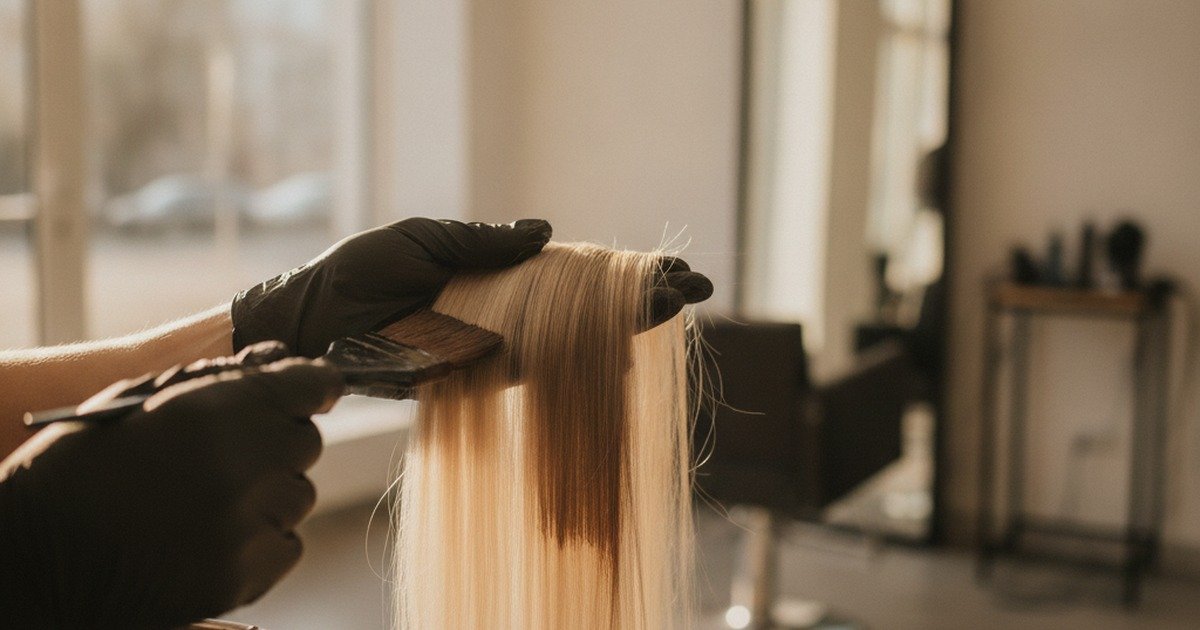

Walk into a color chair in West Hollywood or Los Feliz right now and you might find a client who has been blonde, in some form, since 2021. She's asking her colorist to put some of the color back that four or five years of highlight appointments took out, not for more lift.
So what is reverse balayage, exactly? It's the service that answers that request: a hand-painted lowlighting technique that adds depth into hair that's already been lightened, instead of lightening it further. No bleach, no lifting, just pigment going back in where it used to be.
It sounds like a small distinction until you see it in the mirror. A client who has spent years chasing "as light as possible" often ends up with hair that reads flat under normal lighting, one uniform pale color with no shadow or shape to it. Reverse balayage is the technical fix for that specific problem. It's worth understanding the mechanics before you book, because the difference between a result that looks intentional and one that looks muddy comes down to a handful of decisions made before a brush ever touches your hair.
What Reverse Balayage Actually Is
Traditional balayage lifts. A colorist sweeps lightener onto sections of hair to create soft, sun-brightened highlights, building dimension by going lighter in some places than others. Reverse balayage runs the opposite direction: a colorist hand-paints darker, dimensional lowlights into hair that's already light, using color that deposits pigment rather than lifting it out, according to Wella Professional's color education guide.
The technique itself looks familiar. It's still freehand painting, still done section by section with a brush, still built for a soft, graduated result rather than a hard line. What changes is the product and the direction. You're adding warmth and dimension back into hair that lightener has already stripped flat, not chasing more brightness.
This is where the term "reverse balayage blonde" gets used online, sometimes confusingly. It means keeping a blonde base while reintroducing enough lowlight depth that the color reads dimensional instead of flat and uniform.
If you've searched for reverse balayage before and after photos, you've probably noticed the same visual pattern repeating: a starting shot with pale, uniform blonde, and an after shot where soft ribbons of deeper color run through the mid-lengths and ends. That contrast is the entire point of the technique, and it's a useful gut check when you're building a reference photo folder for your own consultation.
Why This Is Suddenly Everywhere in LA Salons
Fall 2026 trend coverage from beauty outlets like Perfect Corp and The Zoe Report has been naming reverse balayage as one of the season's go-to requests, tied to a broader shift away from years of maximalist blonding. That's editorial framing rather than a verified statistic, but it tracks with the broader pattern: requests for depth rather than more brightness.
The pattern behind it is straightforward. Clients who have maintained very light blonde for several years tend to hit a wall with the upkeep: root touch-ups on a schedule that never really lets up, toning appointments in between to keep brass at bay, and hair that's gradually gotten more porous and harder to manage with every session. Clients often say they're tired of the toning schedule that comes with staying this blonde, and reverse balayage offers a way out that doesn't mean going all the way back to a dark base.
It also solves a specific vanity problem. Years of highlights, done well or done cheaply, can leave hair looking washed out rather than sun-kissed once the novelty of "as light as possible" wears off. Adding lowlights back creates the contrast that makes a blonde look intentional again instead of just faded.
What Happens During the Consultation
A good reverse balayage consultation starts with the colorist looking, not painting. They're checking the current base tone, how many past lightening sessions the hair has been through, and where the condition is strongest and weakest, usually the mid-lengths and ends versus the newer growth near the scalp.
Undertone matters more here than in almost any other color service. A colorist will typically hold swatches near your face and against sections of your hair to land on a family, gold, chocolate, ash, or biscuit are common choices for complementing an existing blonde, rather than picking a shade in the abstract, per Revlon Professional's stylist guide.
The other decision made at this stage is demi-permanent versus permanent color, which changes how committed and how maintenance-heavy the result will be. This is also the point where a colorist will flag whether your hair needs a filling step first, which is common enough on heavily highlighted hair that it's worth understanding before you sit down.
Why Your Colorist Might Fill Your Hair First
A filler is an intermediate step that rebuilds pigment, mostly warm reds, coppers, and golds, that bleach strips out of hair over repeated lightening sessions. Without it, a new color applied directly onto very porous, over-lightened hair can turn ashy, greenish, or patchy, because there isn't enough underlying warmth left for the new pigment to read true, according to My Hairdresser Australia's color education.
The commonly cited rule of thumb, from My Hairdresser Australia's color education, is that if your target depth is three or more levels darker than your current lightened shade, fill first. That's a professional guideline, not a fixed chemical law, and a colorist will still judge it case by case against how your specific hair is behaving.
Skipping the fill on hair that needs it is a common reason a reverse balayage attempt turns muddy. The color itself was probably mixed correctly. It just had nothing solid underneath it to hold onto, which is closely related to the porosity issue below.
Think of it as priming a wall before paint. A colorist filling stripped-out hair is replacing the warm base pigment that bleach removed, section by section, so the lowlight color going on top has something consistent to grab. Skip that step on heavily lightened ends and you're painting a rich chocolate lowlight directly onto hair with almost no underlying pigment left, which is exactly when a result turns ashy or splotchy instead of rich.
The Porosity Problem: Why Bleached Hair Grabs and Fades Unevenly
Bleaching removes melanin and raises the hair's cuticle, and repeated lightening sessions raise porosity further, usually unevenly across a head that's been highlighted in stages over years rather than all at once. High-porosity sections absorb pigment fast, sometimes too fast, and then release it just as quickly when you shampoo, according to West Hollywood colorist Ana Salinas.
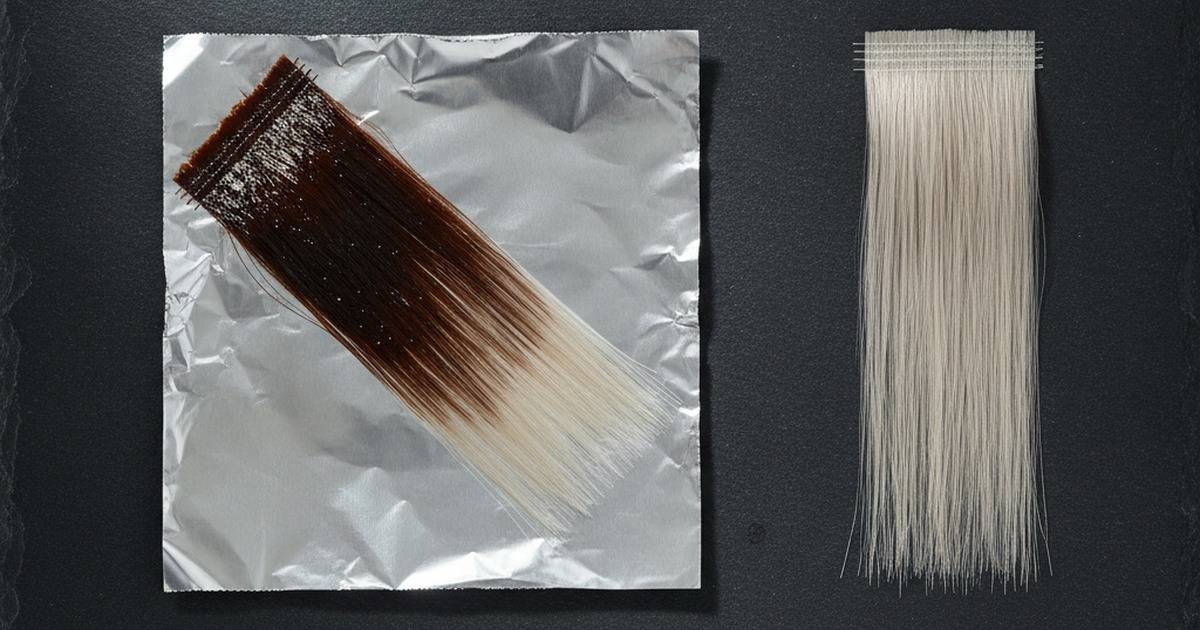
This is why the same lowlight color can look rich and saturated in one section and noticeably faded in another within a few weeks, even when it was applied in a single visit by the same colorist. The unevenness traces back to the hair's own history: years of highlights hit different sections at different times and with different amounts of lift, so each section ended up with its own porosity level. That's what shows up later as color absorbing and fading at different rates across the head.
Understanding this also explains why over-lightened highlights turn brassy in the first place: porous hair loses the cooler, ashier pigments faster than the warmer underlying tones, which is the same mechanism working in reverse when a colorist deposits a lowlight. A colorist who checks porosity before painting is trying to head off exactly this unevenness rather than fix it after the fact.
One Session or Two? What Actually Determines It
There's no single verified number that applies to every head of hair here, and any source that promises one is oversimplifying. What's true across the professional sources covering this technique is more conditional: one appointment covers most clients, since reverse balayage itself is a freehand lowlight application with no lightener involved.
Where a second session comes in is prior damage. Hair with heavy or inconsistent lightening history, several rounds of past balayage or highlights at different salons, uneven porosity from box color mixed in along the way, may need a color-correction or filling session first, before the actual lowlight painting happens. That effectively turns the process into two visits rather than one.
If you're not sure which category you fall into, that's a fair thing to ask about directly at booking. A colorist who has actually seen your hair in person, ideally through photos sent ahead or a quick in-salon consultation, is in a much better position to tell you than any general guide can be, including this one.
A useful mental shortcut: if you've stuck with one colorist and one steady lightening routine for years, a single session is more likely. If your color history is a patchwork of different salons, different box-color touch-ups, and different levels of blonde over time, budget the mental and financial space for two visits instead of building your expectations around one.
How to Ask for Reverse Balayage Without Going Flat or Muddy
The language you use in a consultation shapes the result more than most clients realize. Instead of asking generally for "reverse balayage," try being specific about what you want to avoid: "I want dimension back without losing my blonde entirely" gives a colorist a clearer target than the technique name alone.
A few questions worth asking directly, alongside the questions worth asking any new colorist:
- "Based on my hair's condition, do you think I'll need a filler first?"
- "What tone family are you thinking, and how many levels darker is that from my base?"
- "Are we doing demi or permanent, and what does that mean for my maintenance schedule?"
The mechanics that keep a result from going flat or muddy are largely staging and restraint. Colorists commonly keep lowlight tones within one to four levels of the existing base rather than making a hard jump, and they build in stages if the hair is compromised rather than depositing maximum depth in a single pass. That staged approach is guidance echoed by both Wella Professional and Revlon Professional's stylist education materials. Hand-painting in a sweeping, graduated placement, rather than blocking in solid panels, is what keeps the result reading like dimension instead of a slab of dark color sitting on top of blonde.
If you have never sat through one, it helps to know what a full color correction appointment looks like before you book, especially if your colorist flags your hair as needing that step first. And if budget is part of your decision, it's worth reading up on what a color correction like this actually costs in LA before your consultation, so the conversation about filling and staging doesn't come as a surprise.
Maintenance: Demi vs. Permanent and the Toning Cadence
The product choice made in your consultation has real consequences for upkeep, according to Wella Professional's stylist education materials. Demi-permanent, ammonia-free gloss color, Wella Color Touch is a commonly used example, deposits pigment without lifting and leaves no hard regrowth line. It fades gradually over roughly 28 shampoos, which makes it the lower-commitment option if you're not fully sold on going darker.
Permanent formulas, Wella Koleston Perfect is the example given, last longer, roughly six to twelve weeks, but come with visible regrowth that needs managing over time. Neither option is free of upkeep. It's a tradeoff between how long the color holds and how much root maintenance you're willing to schedule.
Regardless of which you choose, maintenance-toning visits are typically recommended every seven to eight weeks to keep the lowlights and the surrounding blonde reading correctly together. This is also a good moment to understand the chemistry difference between a gloss and a toner, since the two get used almost interchangeably in casual conversation but do different jobs in the chair.
None of this happens in a vacuum from your original decision to go blonde in the first place. If you're weighing whether a full reverse balayage correction makes more sense than committing to another year of highlight maintenance, it's worth revisiting the reasoning behind choosing between balayage and highlights in the first place, since that same logic about lift, upkeep, and lifestyle applies here too.