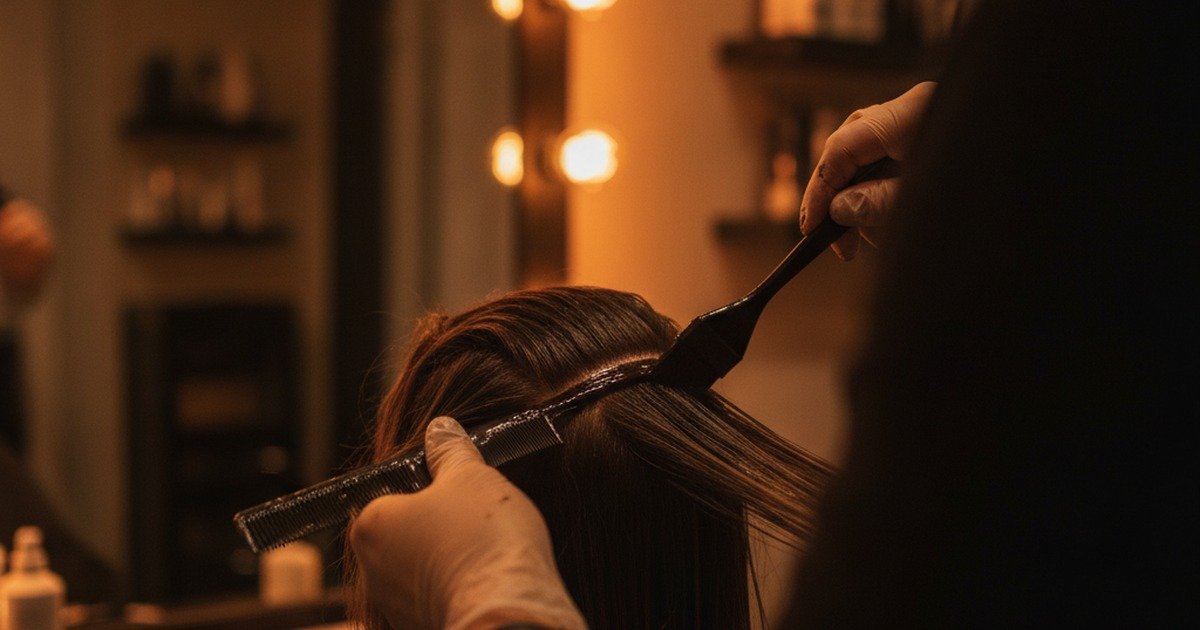

Clients ask me this more than almost any other question, usually right after a bad experience: does hair color damage your hair? The honest answer depends entirely on which service you're talking about.
A root touch-up with a gloss and a full head of bleach are both technically "hair color," but they do almost nothing alike to the strand underneath. One barely touches the cuticle, hair's outer, shingle-like protective layer. The other rewires the internal structure that gives hair its strength and elasticity.
Once you understand what each service actually does at the molecular level, you can tell the difference between a service that costs structural integrity by design and one that went wrong. That distinction is the whole question this article answers, and it comes down to chemistry plus technique.
What "Damage" Actually Means, Chemically
Start with structure. Hair is built from keratin, a protein whose strength comes largely from disulfide bonds: sulfur-to-sulfur bridges between cysteine amino acids that link keratin chains together like rungs on a ladder. These bonds let hair stretch under tension and spring back instead of snapping. They're the first structural target of the services that lift: permanent color and lightening, both of which depend on hydrogen peroxide.
Permanent color and lightener both work in an alkaline environment, meaning the pH sits above neutral. Ammonia, or in ammonia-free formulas an alkalizing agent called monoethanolamine (MEA), raises that pH and swells the cuticle, lifting its overlapping scales away from the hair shaft. That swelling and lifting is what colorists mean by cuticle lifting: the physical opening of hair's outer layer so something can get inside. Once the cuticle is raised, hydrogen peroxide and small dye-precursor molecules travel into the cortex, the thicker inner layer that makes up most of hair's mass and holds most of its natural pigment, or melanin.
According to the BC Campus cosmetology textbook Hair Colour for Hairstylists, peroxide then does two jobs inside the cortex at once: it decolorizes natural melanin, called lift, and it oxidizes the dye precursors into larger color molecules that get trapped inside the cortex once it closes back down, called deposit.
Lightening pushes this further. Hydrogen peroxide doesn't stop at melanin. Given enough concentration and processing time, it also oxidizes disulfide bonds themselves, converting them into a sulfonic-acid form that can no longer hold keratin chains together the way the original bond did.
This oxidation reflects established cosmetic-chemistry consensus, and it's a genuinely permanent change: once a disulfide bond has been oxidized this way, it does not reform. Severely bleached hair feels gummy when wet and straw-like when dry for exactly this reason, no matter how much conditioner gets layered on afterward. The internal scaffolding itself has changed at a structural level, something a topical treatment cannot undo.
The most rigorous look at this comes from a 2018 study in the International Journal of Cosmetic Science by Grosvenor et al. The researchers examined bleached hair using electron microscopy and redox proteomics, the study of a sample's full protein content, and found that alkaline peroxide bleaching causes ultrastructural damage in both cuticle and cortex. Protein loss increases as bleaching gets more severe, pulled from the whole fiber rather than just the surface layer, and the study doesn't publish one tidy percentage for how much protein a given bleach service costs you. What it confirms is the mechanism: the more aggressive the lightening, the more the internal protein structure gets pulled apart.
All of this changes porosity, a measure of how easily moisture and other substances move in and out of the hair shaft. Hair with a lifted, damaged cuticle and an eroded cortex absorbs, and often over-absorbs, toner, color, and moisture unevenly. As a result, heavily processed hair can grab a toner faster than expected and turn a shade darker or ashier than the swatch promised, and it typically shows less shine and lower tensile strength than virgin hair.
The Three-Tier Damage Ranking, From Gentlest to Harshest
Gloss and demi-permanent color: cuticle-level only
A gloss, also called a demi-permanent, is formulated without ammonia, or with only a very low-alkalinity alternative, and it's applied with a low-volume developer or none at all. That combination barely swells the cuticle. It never lifts natural pigment, and it doesn't reach the cortex the way a lightening service does.
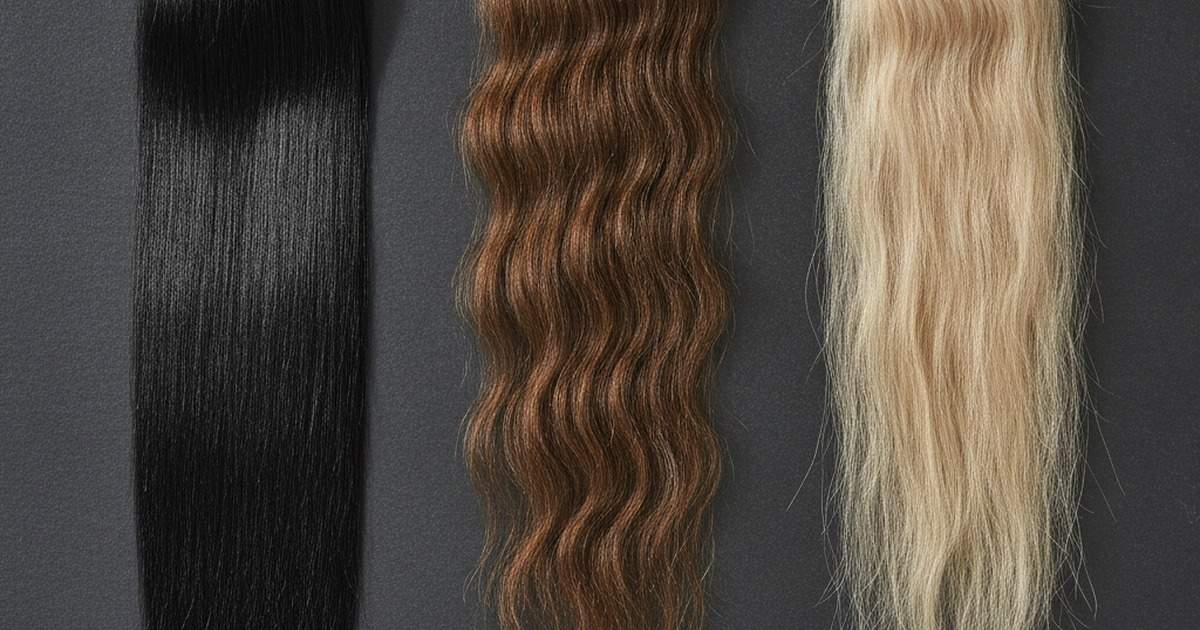
Wella Professional's own consumer education page confirms that demi-permanent formulas skip ammonia and the lift step entirely, depositing color close to the hair's surface instead. This same mechanism explains the difference between a gloss and a toner, a distinction worth understanding on its own if you're trying to figure out what your last appointment actually did to your hair.
Because a gloss never opens the door to the cortex, this tier comes closest to doing nothing structurally. It fades over several weeks. It doesn't break down keratin.
Permanent single-process color: moderate, real, but bounded
Permanent single-process color needs an alkalizing agent to lift the cuticle, and it typically causes at least some genuine lightening of natural melanin. Even a "same level" permanent color technically lifts pigment and redeposits new color on top of it. That means it reaches the cortex, and it does involve real peroxide-driven oxidation. This is where real structural change starts.
It's still a meaningfully lower dose than lightening, though: lower peroxide concentration, shorter processing time, and none of the melanin-stripping intensity of bleach. The damage here is real, moderate, and bounded.
Bleach and double-process color: structural cortex damage
Lightening services, whether that's foils, a balayage, or a full head of bleach, sit at the top of the damage scale for a specific reason. They combine the highest peroxide concentration with the longest or most repeated exposure, and per Grosvenor et al., they produce documented ultrastructural damage to both cuticle and cortex plus whole-fiber protein loss that scales with how aggressive the lightening is. This is the tier where disulfide bond oxidation happens at meaningful scale, and where colorists get most conservative about spacing between services. If your color history involves lightening, you're working with hair that has permanently lost some of its original internal structure, which is why bleached hair needs different aftercare and different spacing between services than a simple root touch-up does.
Developer Volume, Explained Plainly
Developer is the hydrogen peroxide component mixed with color or lightener, and its strength gets measured in "volume," a number that corresponds directly to a percentage of hydrogen peroxide. Higher volume means more peroxide, more potential lift, and more potential for damage if it's used past what the job actually needs. Here's what each volume does, and why the right choice matters more than the color brand or the boldness of the shade you picked.
- 10 volume = 3% hydrogen peroxide. Minimal to no lift; used for deposit-only work like toning, glazing, or going slightly darker.
- 20 volume = 6% hydrogen peroxide. Lifts natural pigment roughly one to two levels; the standard developer for most single-process permanent color. Wella Professional's own product listing for Welloxon Perfect Crème Developer 20 Volume confirms it at 6% hydrogen peroxide.
- 30 volume = 9% hydrogen peroxide. Lifts roughly two to three levels; used for more aggressive single-process lightening. Wella's listing for the 30 Volume developer confirms the same figure.
- 40 volume = 12% hydrogen peroxide. Lifts roughly three to four levels; reserved for bleach and lightening work performed by a trained professional, and it carries meaningfully higher damage and burn risk if it's mishandled.
Wella's own product pages confirm 20 volume at 6% and 30 volume at 9%. The 10-to-3-percent and 40-to-12-percent mappings are industry-standard figures used consistently across professional color education. The pattern that matters for you as a client: a colorist who reaches for 30 or 40 volume "just to be safe" when 20 volume would achieve the same result is adding peroxide exposure without a matching benefit, and your hair pays for that trade.
Why Most "My Colorist Damaged My Hair" Complaints Are Process Failures
Here's a pattern I've seen over and over: a client arrives convinced that "the bleach" or "the dye" itself wrecked their hair, when the chemistry did exactly what it was designed to do. The actual failure happened in how the service was applied. In my chair, this shows up often in LA specifically, where box-color touch-ups between salon visits and closely spaced balayage appointments are part of the culture, and I watch for overlap and over-processing because of it. Three mistakes account for most of it.
- Overlap onto previously colored or bleached lengths. On a touch-up, only the new growth needs a full-strength application. Pushing lightener or full-strength permanent color through mid-lengths and ends that were already processed months earlier runs a second full chemical cycle over hair that has already lost some structural integrity, and that section simply can't take another full pass the way virgin regrowth can. Uneven texture, dullness, and breakage are the predictable result, even when the product itself was used correctly, just on the wrong section.
- Wrong developer volume for the goal. Reaching for 30 or 40 volume when 20 would achieve the same result adds peroxide exposure without a matching benefit. In my experience, this preventable, colorist-controlled decision is a common cause of dryness, brittleness, and breakage.
- Over-processing and undisclosed hair history. Leaving lightener on longer than a strand test calls for is one version of this. The other starts with the client: box dye, henna, and old keratin treatments can leave residues, including metallic salts in some box dyes, that react unpredictably with professional lightener even when they're faded and invisible to the eye. Hair grows slowly enough that a service from two years ago can still be sitting in the ends.
None of this means color chemistry is risk-free. The risk lives in the decisions a trained colorist makes during the service, from developer choice to timing. This is also the logic behind a rule of thumb some colorists use for spacing chemical services on already-processed hair: something like two to three weeks between minimal-lift touch-ups, stretching to six to eight weeks before another significant-lift service on fragile hair. It's a general industry guideline, not a clinically validated standard, and a good colorist adjusts it based on what your strand actually looks and feels like at each visit.
What You Control vs. What Only Your Colorist Controls
What you control
- Your full chemical history. Mention box dye, henna, keratin treatments, and old color services at consultation, even ones from years ago, since they can still be present in your ends.
- How you prepare before the appointment. A little planning goes a long way toward a service your hair can actually handle, and this site's checklist on how to prepare for your next appointment covers the basics.
- Spacing between chemical services. Booking back-to-back lightening sessions close together doesn't give already-processed hair time to recover.
- The questions you ask before booking. A colorist who can explain their developer choice and application plan in plain language is signaling real technical skill, and it helps to know the questions worth asking before you book.
What only your colorist controls
- Where the product goes. Regrowth-only application versus full-length re-saturation is a judgment call your colorist makes in real time, section by section, as the service happens.
- Developer volume selection. Choosing the lowest volume that will realistically achieve your goal is entirely their call.
- Processing time and strand testing. Catching the moment lift is sufficient, before it becomes excessive, requires an on-the-fly judgment during the service itself.
- Repairing existing damage. If previous processing left hair unable to safely take another chemical service, that's what a color correction appointment actually involves. Whether a bond-builder like Olaplex actually undoes this damage, versus making already-processed hair more manageable, is worth understanding before you pay for it.